K1arts is a dynamic collective of artists and thinkers, drawing from diverse fields such as literature, poetry, psychology, and media. At our core, we are dedicated to dissolving the conventional boundaries of art to explore the profound questions of human existence.
Our creative process is a dialogue between the timeless and the contemporary. We find our primary inspiration in the rich mystical and existential themes of legendary Iranian poets, particularly Hafez and Rumi. Their verses—woven with threads of divine love, the folly of mortal certainty, the agony of separation, and the ecstasy of annihilation—serve as the conceptual bedrock for our work.
We translate these complex poetic concepts into tangible, abstract sculptures. Each piece is not merely an object but a three-dimensional interpretation of a spiritual and philosophical idea. Our mediums are modern—employing techniques in 3D modeling, digital fabrication, and mixed media—but our soul is ancient, seeking to give form to the ineffable.
We believe that in our interconnected world, the deepest human questions—those explored by mystics and poets for centuries—are more relevant than ever. K1arts is our declaration to engage with these questions, channeling the wisdom of the past into the artistic language of the present.
This is just the beginning. We look forward to introducing our projects and sharing this journey with you.
To illustrate the core ideas we’ll be exploring in our projects, let’s begin with a powerful example: a poem by the 17th-century master, Saeb Tabrizi. Saeb was a leading voice of the ‘Indian Style’ of Persian poetry, renowned for his intellectual depth, innovative metaphors, and philosophical subtlety.
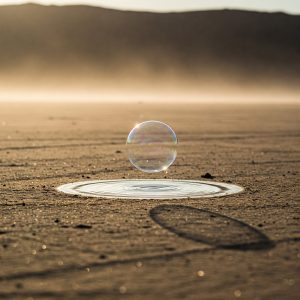
The world is like a bubble, but what a bubble!
Not upon water, but rather on the surface of a mirage.
And what a mirage! One that is seen in a dream.
And that dream, what a dream! A bad, ruinous, drunken dream.
 SOLANA
 OpenSea